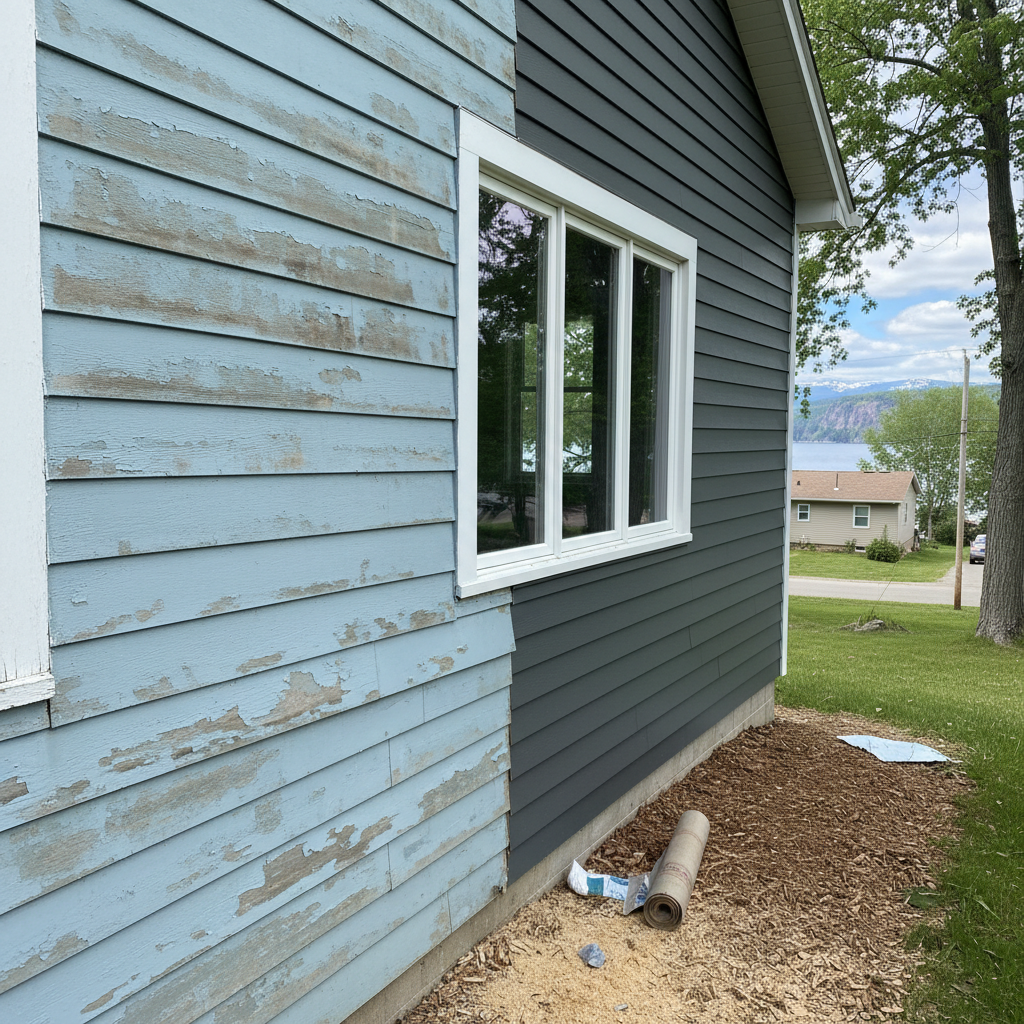
Alright, let's talk about checking your home's siding. It's probably not how you pictured spending a Saturday afternoon, I get it, but it's super important for keeping your house in good shape, especially with the wild weather we get up here in Superior. Basically, you've got two choices: do it yourself or call in a pro. Both have their place, sure, but they're definitely not the same, especially when you think about everything your siding goes through year after year.
The DIY Siding Check-Up: Good for a Quick Look
So, you're thinking of saving a few bucks and taking a peek at your siding yourself? I totally get that. For a lot of folks, a DIY inspection feels like the smart first step. Here's what you're generally trying to spot:
- Obvious Damage: Big cracks, missing pieces, holes — anything that just screams "problem."
- Loose Parts: Are any planks or panels rattling in the wind? Give them a gentle tug; see if they move.
- Mildew/Algae: You'll usually see green or black growth, especially on the north side of your house or in shady spots.
- Paint Peeling/Fading: If your painted siding looks rough, that's a pretty clear visual cue.
The cost for this? Zero, really, besides your time and maybe climbing a ladder. Visually, you're just looking for surface flaws. When we talk about durability here, it's not about how durable the inspection itself is, but how well it helps you keep your siding in good shape. A DIY check is fine for catching the big, glaring issues. It's kind of like checking your car's oil; you can tell if it's really low, but you're not doing a full engine diagnostic, are you?
The big problem with doing it yourself, especially around here, is what you *can't* see. Our freeze-thaw cycles are brutal. Water sneaks into tiny cracks, freezes, expands, and then you've got bigger problems brewing. You might easily miss the subtle signs of water getting in or hidden rot that's slowly developing underneath.
Professional Siding Inspection: The Deep Dive
Now, bringing in a pro like us at Absolute Siding Co. is a whole different ballgame. This isn't just a quick walk-around. When I inspect a home, I'm looking for things most homeowners simply don't have the experience or specialized tools to spot. We're talking about:
- Water Intrusion Points: This is huge. I'm checking carefully around windows, doors, corners, and anywhere two different materials meet. These are prime spots for water to get behind your siding, and once it's there, it can cause rot, mold, and structural damage you won't even see until it's too late.
- Flashing Issues: Is your flashing installed correctly? Is it damaged? This is super important for diverting water away from those vulnerable areas.
- Fastener Integrity: Are your siding panels properly secured? Loose fasteners can lead to them blowing off in our strong winds.
- Subtle Material Degradation: Different siding materials wear out in different ways, you know? I know exactly what to look for with vinyl, fiber cement, wood, or metal siding that signals early failure, not just obvious damage.
- Ventilation: Believe it or not, how your home "breathes" actually affects your siding. Poor ventilation can lead to moisture building up behind the panels.
- Hail and Storm Damage: After a big storm, especially hail, the damage can be pretty subtle. Those little dents in vinyl or fiber cement might look minor, but they can actually compromise the material's integrity.
The cost for a professional inspection varies, but think of it as an investment. It's like preventative maintenance for your biggest asset. You're paying for expertise and a really thorough assessment that could save you thousands down the road. How durable your siding stays is directly tied to how early you catch issues. An early catch means a smaller, cheaper repair instead of needing a full replacement.
Appearance-wise, a pro can tell you if that fading or minor damage is just cosmetic or if it's pointing to deeper problems. For instance, if you've got some older vinyl siding on the west side of your house that looks a bit chalky, that's normal wear and tear. But if that chalkiness comes with warping or cracking, that's a sign the material is failing.
My Recommendation for Superior, WI Homeowners
Given our climate — the heavy snow loads, the ice dams, those strong winds off Lake Superior, and the relentless freeze-thaw cycles — I really recommend a professional siding inspection every few years, or definitely after any major storm. A DIY check is a good habit for staying generally aware, but it shouldn't ever replace a pro's eye.
The soil conditions around here, especially in some of the older neighborhoods with clay, can also contribute to moisture issues if your grading isn't quite right. That impacts how water interacts with your foundation and lower siding, too. A pro will look at the whole picture.
You want someone who knows exactly what to look for, someone who's seen it all and understands how our local conditions affect your home's exterior. It's not just about what's broken; it's about what's *about to break*. Catching those things early is how you protect your investment and keep your home looking good and staying dry for years to come. Seriously, don't wait until you see water stains on your interior walls; by then, the damage is already significant.